When Theo ten Caat arrived in Scotland in 1991, Aberdeen could have fielded a very impressive Netherlands five-a-side team. Goalkeeper Theo Snelders was first to make the journey from the land of ‘total football’ to the north east of Scotland in 1988, followed by Hans Gillhaus and Willem van der Ark a year later. Peter van de Ven made it four Dutchmen in 1990 before ten Caat joined the party the following season.
Given that this website’s tagline celebrates ten Caat’s cult status, it’s about time we featured the man himself.
Signed from FC Groningen by Alex Smith (Jocky Scott served as co-manager alongside Smith until September 1991 when he joined Dunfermline), ten Caat arrived in Aberdeen with seven years’ experience in the Dutch Eredivisie; among ten Caat’s career highlights at this stage had been playing against Maradona’s Napoli during a spell with FC Twente.
‘I had a great feeling about Alex Smith’
Ten Caat explains that manager Alex Smith was a big factor in his decision to join the Dons. “I had a great feeling about Alex Smith – the way he talked about me fitting in perfectly, with my style of play,” he recalls.
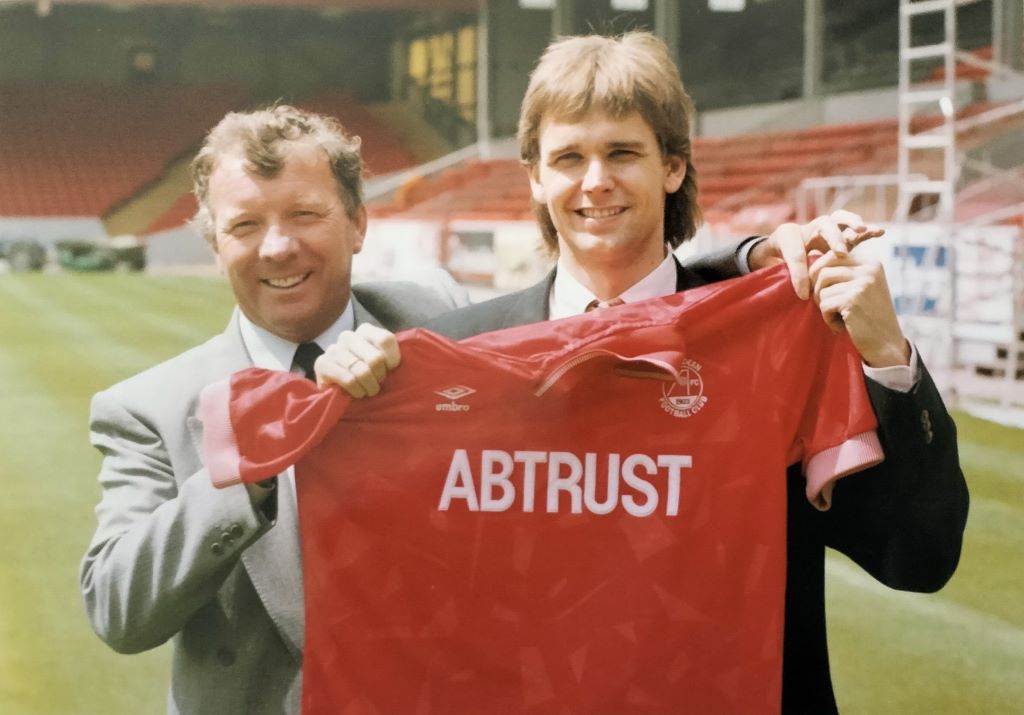
These were heady times for Smith’s side; the Dons had secured a League Cup and Scottish Cup double in season 1989/90 and had come within a single match of winning the league championship in 1991 – only to lose out to rivals Rangers on the final day of the season.
“When I arrived at Pittodrie I knew I made the right decision,” ten Caat says. “I was thrilled to get the opportunity to join a club of Aberdeen’s stature, even knowing that Scottish football was quite different from how the Dutch game is played… In Scotland, it’s more physical, there’s more speed, more running and more direct play forward, whereas in Holland, we played more combination football, trying to use tactical formations against each other to give teams problems to defend.”
One game in which Aberdeen undoubtedly got their tactics spot-on was their visit to Ibrox to face Rangers in September 1991. Only four months after their title-showdown – a match Rangers won 2-0 – the Dons reversed the scoreline in an afternoon ten Caat remembers fondly. “My first game at Ibrox was a great game for me, not only the atmosphere but the way we played and won easily,” ten Caat says. “It was a match in which I had a big influence.” The Dutchman provided a composed pass for Eoin Jess to slam home the game’s opening goal before Brian Grant sealed the points in the closing minutes.
Ten Caat and his new teammates had made a good start to the league season – winning seven of their opening 10 league matches and looking poised for another title challenge – but a major dip in form during the winter ultimately lost manager Alex Smith his job; in February 1992, Smith became the first-ever Aberdeen manager to be sacked.
Ten Caat believes an injury to Alex McLeish, who he described as ‘our captain and a real leader’, led to the drop in Aberdeen’s form and, ultimately, Smith’s sacking. Club legend Willie Miller took over from Smith, but he could only steer his side to sixth position, and Aberdeen missed out on European competition for the first time in 15 years.
‘More of a Messi than a ten Caat’
Despite Aberdeen’s disappointing league campaign, ten Caat – who scored five goals in his debut season in Scotland – was enjoying life in his new home city. “Living in Aberdeen was amazing,” he recalls. “The people were friendly. Going to the shops, talking to people and supporters, everyone was very friendly and made me feel part of the community.” However, there was one aspect of going to the shops in Scotland that Theo had to learn about quickly. “Queueing in the shops was something I had to learn,” he remembers. “We Dutch are a bit direct, and I just went towards the person who was available, which wasn’t always appreciated by other people in the shops! I learned fast though.”
Author and Aberdeen fan Nick Brown – who worked with ten Caat on his recent autobiography, Standing Free – has fond memories of his club’s Dutch contingent. “Having the Dutch boys at Aberdeen was really exciting,” he says. “Remember, this was a time when players going abroad wasn’t overly common. Signing Dutch players was exciting just by the fact that they were Dutch. This was the era of Gullit, van Basten, Rijkaard, Koeman, etc and Dutch football was pretty much the top rung of the ladder. They had such style, and it all looked so natural for them to have a football at their feet.”
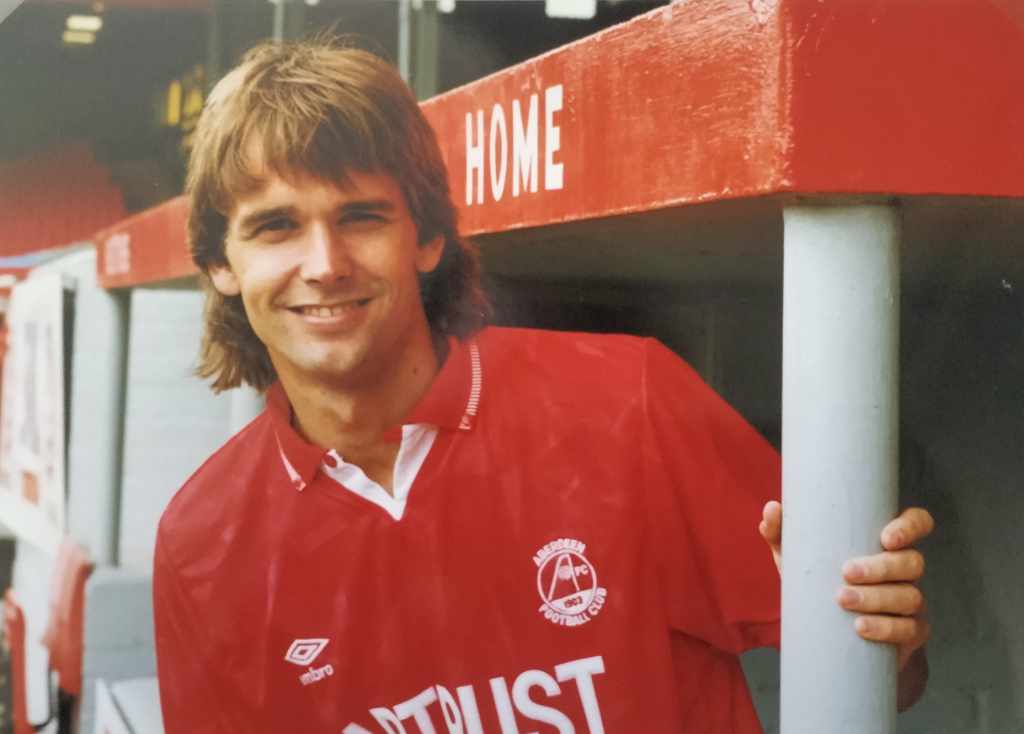
Ten Caat spent three years at Aberdeen, making a total of 54 appearances, 30 of which came in his first season at Pittodrie. Nick believes that ten Caat’s skill and composure on the ball would have made him a star in the modern game. “Theo, I think in all honesty, was one of those players who, if they have played in a slightly different era, would have been more of a star,” he says. “At that time, the Scottish game was very British – hurly-burly, knock it up to the big centre forward – but what Theo could do with the ball would have made him a star nowadays, now that the emphasis is more on passing and moving and playing nice little triangles. Your website’s tagline asks: ‘are you more of a Theo ten Caat than a Lionel Messi?’ and, bizarrely enough, I think Theo is more of a Messi than a ten Caat.”
Beautiful Brockville, Argyll & Bute
In ten Caat’s second season at Pittodrie, Willie Miller’s side finished second behind Rangers in the league and lost both domestic cup finals to the treble-winning Ibrox club. However, the Dutchman fell out of favour with Aberdeen’s new manager and found his first team appearances to be limited. In 1994, three years after arriving in Scotland, ten Caat returned to his homeland to sign for Vitesse Arnhem.
More than three decades on from his spell at Aberdeen, ten Caat maintains a keen interest in the club and is a regular visitor to Scotland; when speaking to us, the ten Caat family had just returned from a holiday in Argyll and Bute. Exploring different parts of Scotland was something Theo enjoyed as a player, too. “Living and playing in Aberdeen gave me many memories,” he reflects. “Not only playing in the Scottish league, against big clubs like Glasgow Rangers or Celtic, but also the games against Dundee United or the Edinburgh games, and against teams like Ross County, Clydebank or Airdrie. Raith Rovers with the train passing by whilst playing a game was nice, and then Falkirk away with the beautiful old stadium [Brockville] was also very pleasant.”
Ten Caat is one of those players, and names, that has Scottish football fans of a certain age turning misty-eyed with nostalgia. Why was this era so special? Do young fans nowadays get as excited about a new arrival from abroad? Does the Aberdeen jersey feel the same without the Abtrust and Umbro combination with buttoned collar? Characters like Theo ten Caat are what brought this website into existence. Thanks for the memories, Theo.
Special thanks to Theo ten Caat and Nick Brown for making this feature possible. You can find out more about Nick’s Aberdeen books on the following links:
Standing Free: The Life and Times of Theo ten Caat
Going Dutch: How Aberdeen Was Painted Orange
 Scottish Football Stories