On Saturday 4 May 1996, more than 25,000 expectant fans packed the terraces of two of Scottish football’s most iconic old venues as the First Division title race reached a nail-biting conclusion.
After 175 matches had been played, and almost 500 goals had been scored and conceded amongst the league’s 10 sides, the trophy’s destination remained undecided going into the final round of fixtures.
In Greenock, on the south bank of the River Clyde, Morton welcomed Dundee United to Cappielow. After an arduous campaign, both sides were level on 66 points, and retained hopes of clinching the title.
Sixty-five miles east in Dunfermline, one of Scotland’s ancient capitals, the home side had destiny in their own hands; the hosts knew that victory over Airdrie would guarantee them the trophy.
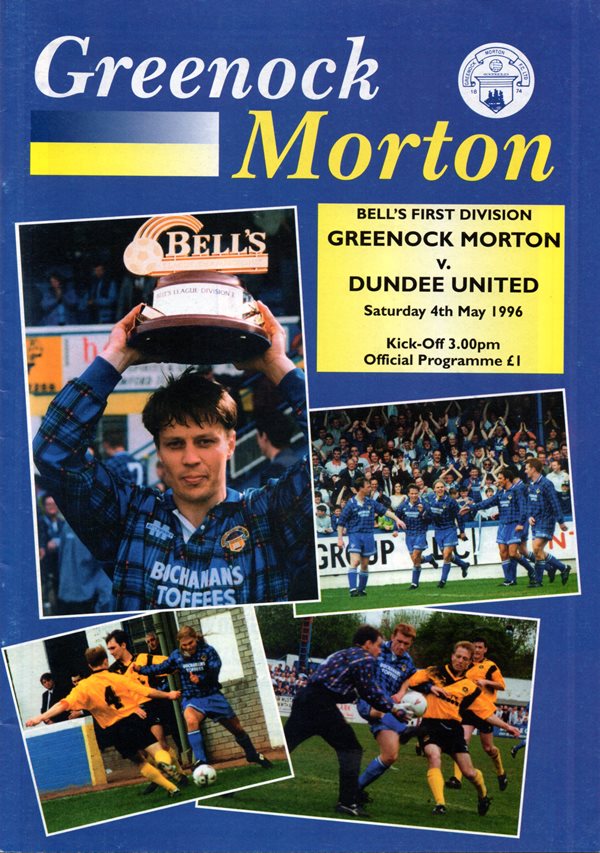
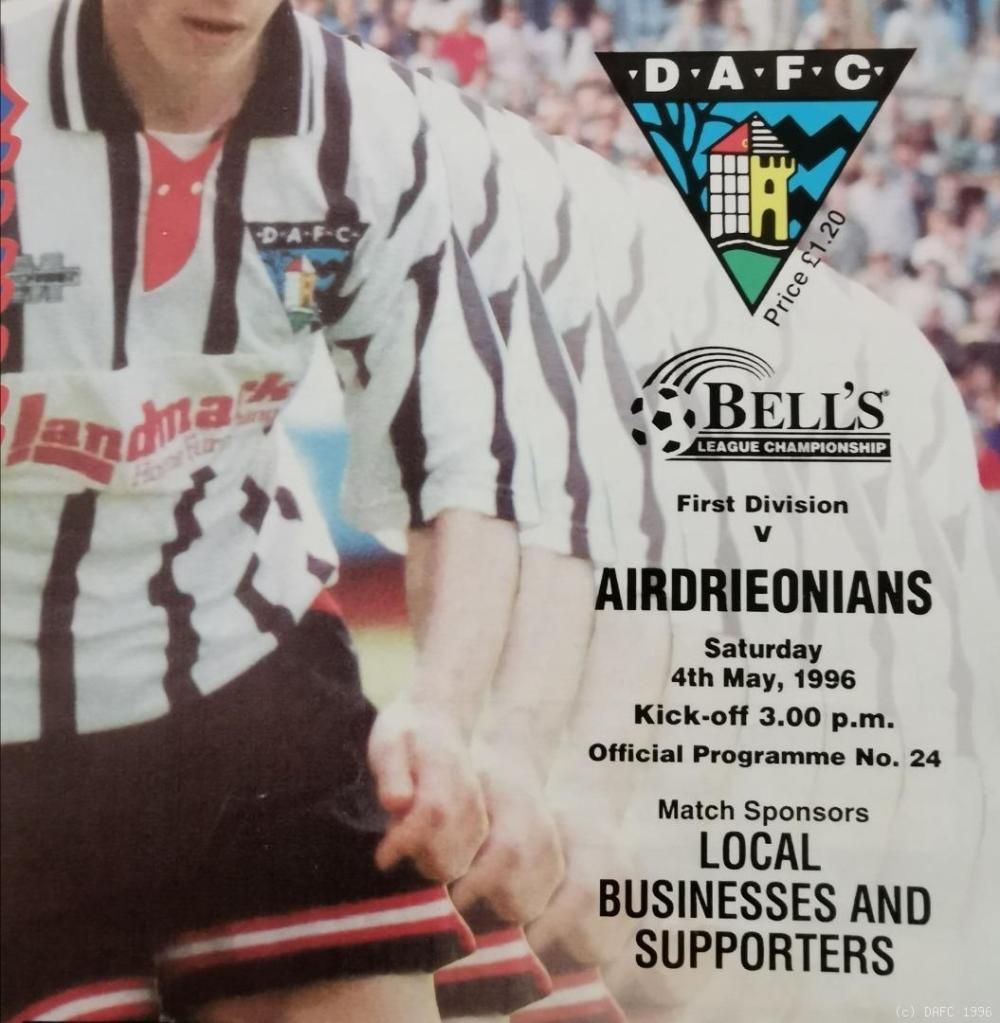
Close but no cipar (sorry)
Dunfermline, managed by Bert Paton and aiming to return to the top flight for the first time since relegation in 1992, were two points ahead of Dundee United and Morton. A week earlier, in a tense affair at Tannadice, the Pars had defeated Dundee United 1-0, a result that saw them leapfrog Billy Kirkwood’s side at the top of the standings.
In each of the previous three campaigns they had come agonisingly close to achieving their goal. At the end of season 1992/93, the East End Park club finished in third place with the top two sides gaining promotion. The Pars finished a place higher in 1994, but, with league reconstruction taking place across Scottish football, there were no play-offs for finishing second. The play-offs were on the agenda for season 1994/95 and, again, Bert Paton’s side finished runners-up. However, their hopes of a return to the Premier League were dashed by Aberdeen, who defeated the Pars 6-2 over two legs.
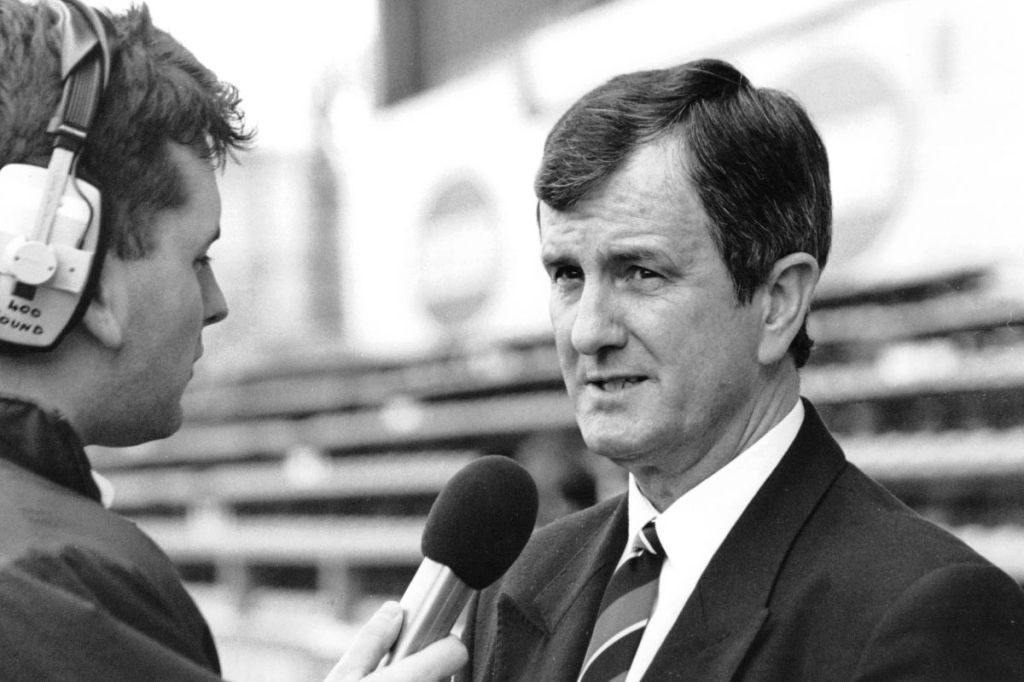
So, the ‘third-time-lucky’ proverb appeared not to apply to Dunfermline, but the locals must have retained a sense of optimism as more than 13,000 of them packed into East End Park for Airdrie’s visit. Would this be the year for Bert Paton’s side?
Stage set at Cappielow
Across the country, the atmosphere was arguably even more tense; the only certainty at 5pm in Greenock would be that one of Morton or Dundee United would miss out on a top two spot.
Billy Kirkwood’s Dundee United hoped to bounce back to the top flight at the first time of asking. United were relegated from the Premier League in 1995, only a year after winning the Scottish Cup under maverick manager Ivan Golac. United knew that a draw would secure a play-off spot, courtesy of their superior goal difference over their hosts.
For the Greenock side, a win was the only outcome that could see them return to the top flight for the first time since 1988. Managed by club legend Allan McGraw, Morton had won the Second Division in season 1994/95. With Finnish duo Marko Rajamaki and Janne Lindberg in their ranks, McGraw’s side had hopes of gaining back-to-back promotions. Despite losing talisman Derek McInnes to Rangers halfway through the campaign, Morton went toe-to-toe with their more heralded rivals at the top of the table.
The visitors, perhaps buoyed by the wealth of experience in their side (Ally Maxwell, Maurice Malpas, Dave Bowman, Owen Coyle and Craig Brewster were all in the starting line-up), began the match well and took the lead in the sixteenth minute when defender Brian Welsh met a corner at the front post and sent a header past Morton ‘keeper Derek Wylie.
Brewster, the goalscoring hero of the 1994 cup final win over Rangers, was particularly lively, and Wylie had to be alert on a couple of occasions to stop him from adding to United’s lead. However, the hosts – sporting their Argentina-style blue and white stripes, two years after they grabbed headlines with their tartan outfits – grew into the game and United ‘keeper Maxwell had to make a full stretch save to his left to deny Morton’s Warren Hawke from equalising before half-time.
Delay in Dunfermline
Over in Fife, they were running 13 minutes behind the action in Greenock; kick-off had been delayed to ensure the crowd of more than 13,000 could enter the ground safely. Once the game got underway, it was clear that Airdrie weren’t going to allow the hosts to process to the title. Having started the stronger side, the visitors almost went ahead when a delightful chip from Paul Harvey caught Pars goalkeeper Ian Westwater off his line and clipped the crossbar.
In the pre smart phone era, news of Dundee United’s opening goal at Cappielow would have filtered through the East End Park terraces courtesy of numerous hand-held radios nervously pressed against ears.
However, the anxiety was lifted in the twenty-ninth minute when Pars striker Andy Smith planted a close range header past former Dunfermline goalkeeper Andy Rhodes. So, Bert Paton’s men were back in pole position following Dundee United’s 30-minute spell at the top of the table.
A relieved Dunfermline went into the half-time break with a one-goal lead. What was the mood in the changing room? Would they have listened to the action from Cappielow, where the second half would now be underway? If so, there may have been the odd celebration when United striker Craig Brewster headed into his own net in the fifty-third minute to level the scores.
Parity didn’t last long, however. Two minutes after his own goal, Brewster leapt to meet a Steven Pressley free-kick. His header dropped invitingly for strike partner Robbie Winters, who met the ball just ahead of Wylie and nodded United back in front from close range.
Winters’ goal put United in a strong position, with Morton now needing to score twice without reply to earn a place in the top two. However, the Greenock side did not give up the fight, and they looked like they had a good opportunity to equalise with the award of an indirect free-kick following a stramash in the United box, but Rajamaki skewed his shot wide. Derek Collins then fired an inviting ball across the face of goal, which somehow sailed through the six-yard-box without anyone in blue and white gambling.
Celebrations in both away sections
While Morton were pushing for a leveller, cheers rung out from the away sections in Dunfermline and Greenock as news of Airdrie’s equaliser filtered across the country. With Dunfermline caught between pushing for a second goal or protecting their lead, Airdrie seized the moment. A long ball over the top sent pacy striker Paddy Connolly on a foot race with Pars defender Ivo Den Biemen. A slip from Den Biemen allowed Connolly to gain an advantage as he made his way into the box. As the striker cut inside, Den Biemen attempted a slide tackle. However, Connolly outmaneuvered him, as well as the onrushing Westwater, and laid the ball back for Peter Hetherston, who cracked a shot into the net off the underside of the crossbar.
As things stood, with 55 minutes on the clock at East End Park, and 68 minutes played at Cappielow, Dundee United and Dunfermline were level on 69 points. However, United had a better goal difference, so a draw would be no use for the Pars in their attempt to win the league and earn automatic promotion to the top flight.
Home fans’ time to cheer
The defining moments of a long, energy-sapping season arrived almost simultaneously. At Cappielow, with eighty-two minutes played, a searching ball into the box was knocked down by Derek Lilley. Rajamaki controlled the knock-down, engineered some space for himself before sending a shot beyond the grasp of Maxwell and into the net. The roar that greeted the equaliser, giving Morton a lifeline in their quest to reach the top flight, could be heard across Greenock.
Meanwhile in Dunfermline, Airdrie’s equaliser had sparked a nervy home side back into life. Hamish French hit a shot from the edge of the box that went agonisingly wide after brushing the post. Around the same time as Rajamaki scored for Morton, Dunfermline’s Alan Moore was sent clean through on goal for the Pars. As he attempted to go round Rhodes, Moore was clipped by the Airdrie ‘keeper, and referee Mike McCurry pointed straight to the spot.
A collective holding of breath took place among the Dunfermline support. Would this be another ‘almost’ moment? A missed penalty in Fine and another goal for either side in Greenock could consign the Pars to second place and a nerve-shredding play-off. They needn’t have worried. Marc Miller’s spot-kick was emphatic and Dunfermline were now 2-1 ahead.
The goals at either side of the country meant it was Dundee United’s turn to be crippled by nerves. A third goal for Morton in the final minutes would see the Greenock side leapfrog the visitors into second spot.
Despite their best efforts, Morton couldn’t force a golden opportunity before the end. Relief was the overriding emotion among United’s players, staff and supporters as Hugh Dallas blew the final whistle.
Highlights from Greenock Morton v Dundee United, 4 May 1996.
Helicopter Saturday as trophy lands in Fife
The conclusion in Greenock sparked the party in Fife. Regardless of how the final 13 minutes played out at East End Park (Dunfermline ultimately won the match 2-1), Bert Paton’s Dunfermline were champions. The First Division trophy was transported to Dunfermline via helicopter, which flew over East End Park before landing at nearby Rosyth. The wait for the trophy allowed Dunfermline players, staff and supporters plenty of time to revel in the celebrations.
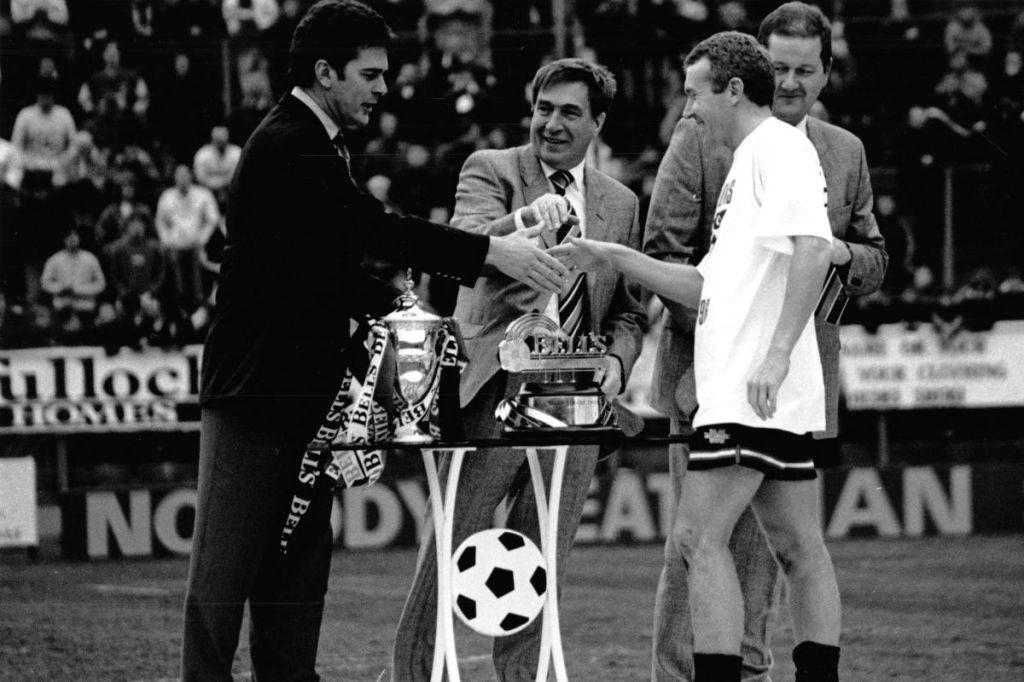
As well as celebrating the league title triumph, everyone connected with Dunfermline paid tribute to club legend Norrie McCathie, who tragically lost his life in January 1996. Club captain and record appearance holder, McCathie played 576 times for Dunfermline before his death at the age of 34. It had been a hugely testing season for Dunfermline, physically and emotionally, but they were returning to the top flight. The Pars finished a very impressive fifth position in their first season back in the Premier League, where they would remain for three years before being relegated in 1999.
Highlights from Dunfermline v Airdrie, 4 May 1996.
Dundee United joined Dunfermline in the Premier League for season 1996/97 after a tense 3-2 aggregate victory over Partick Thistle – who had finished second from bottom in the top flight – in the play-offs.
A return to the top flight continues to elude Morton, but fans happily reminisce about the packed terraces of Cappielow and the day the town of Greenock seemed to stand still with the weight of expectation. Little changed to this day, Cappielow remains one of Scottish football’s most iconic, much-loved venues and is a ‘must see’ for groundhoppers across the UK and beyond. Will the famous terraces ever host another day like 4 May 1996?

